




UK-US Extradition
If you are seeking asylum in the United Kingdom, Human Rights Lawyer offers expert legal support to guide you through the application process. Our experienced lawyers are familiar with the UK’s asylum system and will assist you in preparing a solid claim and gathering the necessary evidence.

The United Kingdom extradites people to the United States under the Extradition Act 2003. In practice, the U.S. doesn’t need to provide as much evidence as the UK must provide when it requests someone from the U.S. According to Interpol Red Notice lawyers, about 90% of U.S. extradition requests for British citizens are approved. By 2026, the process became even faster thanks to digital cooperation between the UK Home Office and the U.S. Department of Justice.
Why this matters even if you’ve never been to America
Even if you live and work in the UK and have never set foot in the United States, you can still fall under the jurisdiction of U.S. authorities. Imagine you run a Shopify store from Bristol. A customer from Florida pays through Stripe, and later their bank claims the payment was fraudulent. Stripe’s U.S. division reports the transaction to FinCEN, and a few months later the FBI classifies it as wire fraud simply because the payment passed through U.S. financial infrastructure.
This is how the U.S. Department of Justice typically approaches such cases in 2026.
How the U.S. gains the right to investigate foreign individuals
This is possible because of the American doctrine of “long‑arm jurisdiction.” It allows the U.S. to treat any payment or digital action as falling under its authority if it has any connection to U.S. servers, payment systems, or infrastructure.
Your British IP address doesn’t matter if the server you interacted with is located in Virginia. Even using a .com domain creates a formal link to the U.S., since it is administered by the American company Verisign.
And this isn’t theoretical. According to U.S. Department of Justice data for 2025, charges were brought against individuals in 47 countries, and 75% of them had never been to the United States. The most common charges were:
- wire fraud — 34%
- money laundering — 28%
- computer fraud — 19%
- tax evasion — 11%
- securities fraud — 8%
The rise in cases is driven not only by the laws themselves but by how the U.S. applies them. Here are common situations that lead to criminal charges and extradition requests:
- Cryptocurrency transactions. Selling bitcoin to a buyer in Texas can result in money‑laundering charges if the buyer later uses the funds illegally.
- Affiliate marketing. If you promote a product that the FDA considers misbranded, and U.S. consumers buy it, you may be held liable regardless of where you live.
- Selling on Amazon. Listing a product as “authentic” when it comes from the grey market can be treated as wire fraud and trademark infringement under U.S. law, even if such imports are legal in the UK.
- SaaS businesses. If your software processes data belonging to U.S. customers, a data breach can lead to criminal liability under certain state data‑protection laws.
- Tax debts. If you previously lived in the U.S. and left with unpaid IRS obligations, those debts remain. After ten years, the IRS can transfer the case to the DOJ’s criminal division.
The doctrine of long‑arm jurisdiction isn’t new, but its enforcement has intensified. In 2020, the DOJ investigated 2,847 cybercrime cases. By 2025, the number had risen to 4,638 — a 63% increase. The main reason is the adoption of automated systems that monitor cross‑border transactions in real time.
Extradition is no longer associated primarily with espionage. Increasingly, it is used as a tool of economic leverage. This is why many people begin researching countries with no extradition treaty with UK long before any formal request is ever filed.
When the U.S. requests the extradition of UK residents, it is usually to protect:
- the interests of American corporations
- tax revenues
- the authority of regulators (FDA, FTC, SEC)
- the integrity of the financial system (sanctions, money‑transfer rules, licensing)
Legal foundation: the 2003 treaty and its reality in 2026
To be honest, the 2003 extradition treaty between the UK and the US was meant to make cooperation smoother. In reality, it turned into a pretty lopsided arrangement.
As a result, public interest in non extradition countries UK has grown sharply since the treaty’s practical effects became widely understood.
When U.S. prosecutors want someone from the UK, they send over a written summary of the accusations — and that’s basically it. They don’t have to provide witness statements, forensic reports, or any real evidence. Just a narrative of what they say happened. And under the treaty, British courts are expected to treat that as enough unless the defence manages to knock it down.
But when the UK asks the U.S. to hand someone over, the standard is dramatically higher. Now you need a prima facie case: witnesses, documents, expert opinions, and a coherent evidentiary theory — essentially, enough material that a reasonable jury could convict.
So the U.S. can write something like: “John Smith conspired to commit wire fraud by sending deceptive emails to Company X,” and that alone is treated as sufficient. They don’t have to show the emails, explain their content, or prove intent.
How the process actually unfolds in 2026
The U.S. is classified as a “Category 2” territory under the Extradition Act 2003. Once a request is filed, the timeline usually looks like this:
Weeks 1–2
The request arrives via the U.S. Embassy to the Home Office. It includes a criminal complaint, an arrest warrant, and a statement confirming dual criminality.
Weeks 3–8
The Home Office performs a purely administrative check — nothing about whether the case makes sense.
At this point, some individuals start considering countries without extradition to UK, often underestimating how early procedural decisions limit that option.
Week 9
The Home Office certifies the request and sends it to Westminster Magistrates’ Court. The person is arrested, usually early in the morning. Passports, phones, and computers are seized.
Weeks 10–12
The first hearing takes place. Bail is often denied in U.S. cases. The judge sets a timetable. Your legal team usually gets about 14–21 days to submit evidence opposing extradition.
Months 4–6
The full extradition hearing happens. This is not a trial. The judge only looks at:
- dual criminality,
- potential human‑rights violations,
- whether the UK is the more appropriate forum,
- whether the person named is actually the person sought.
Guilt or innocence is not assessed.
Month 7
If the judge approves extradition, the case goes to the Home Secretary, who considers diplomatic relations, political context, fairness concerns, and broader public‑interest factors.
Months 8–9
An appeal can be filed with the High Court. Success rates for U.S. cases in 2024–2025 were around 8%.
Months 10–12
If the High Court rejects the appeal, the accused can seek permission to appeal to the Supreme Court. Permission is granted in roughly 3% of cases.
12+ months
If all appeals fail, the Home Office arranges the transfer. The person is flown by the U.S. Marshals Service and taken directly into custody in the federal district where the charges were filed.
How we ended up with this imbalance
The treaty was negotiated in the post‑9/11 climate, when the UK wanted faster extradition procedures for terrorism cases. The U.S. never reciprocated — Congress simply refused to adopt equivalent obligations for American citizens.
In 2011, Lord Justice Scott Baker reviewed the treaty and concluded that the evidentiary imbalance was “broadly in balance” on the grounds that U.S. requests tended to be detailed. The review did not alter the legal framework. The disparity remains in place in 2026. Even what countries don’t have an extradition treaty with the UK can become cooperative partners through political pressure or temporary arrangements.
Algorithm of actions in case of threat of extradition (Checklist)
Before relying on informal references to UK non extradition countries, it is essential to understand how provisional arrest requests actually operate.
The first 48 hours shape the entire outcome. In practice, the steps that matter most are the following:
Check Interpol Status Within 24 Hours
Go to Interpol’s public Red Notice search and enter your full name exactly as it appears in your passport. Check variations as well—if your name is “John Smith,” search “Jonathan Smith” and “J Smith.”
Red Notices become public once Interpol approves them, but “diffusions” do not. A diffusion is a direct alert sent from one national police agency to another, bypassing Interpol’s central review. Britain receives about 400 US diffusions annually, and none of them appear in public databases.
If you locate a Red Notice with your name:
- Request your Interpol file immediately. Email the Commission for the Control of Files (CCF) at [email protected] and use their request form. You have the right to know what information Interpol holds about you and to challenge inaccuracies.
- CCF typically responds in 3–4 months. This is too slow to help with immediate defence, but essential for later stages in court.
- Do not travel. Not even to Ireland. A Red Notice triggers automatic detention in 196 countries. You will be arrested at border control and held for extradition proceedings wherever you are stopped.
- Check UK arrival records. If you recently entered the UK, Border Force may already have flagged you. Request your file from Border Force under GDPR (cost: £10 fee, response time: 30 days). This will show whether monitoring is already in place.
If no Red Notice appears, check for open warrants in US federal courts. Go to PACER (the US court records system, cost $0.10 per page) and search the district where charges are most likely to be filed. Look for:
- Sealed indictments with your name
- Criminal complaints
- Arrest warrants issued but not executed
PACER will not display sealed cases, but clerks sometimes unseal limited portions that reveal your name.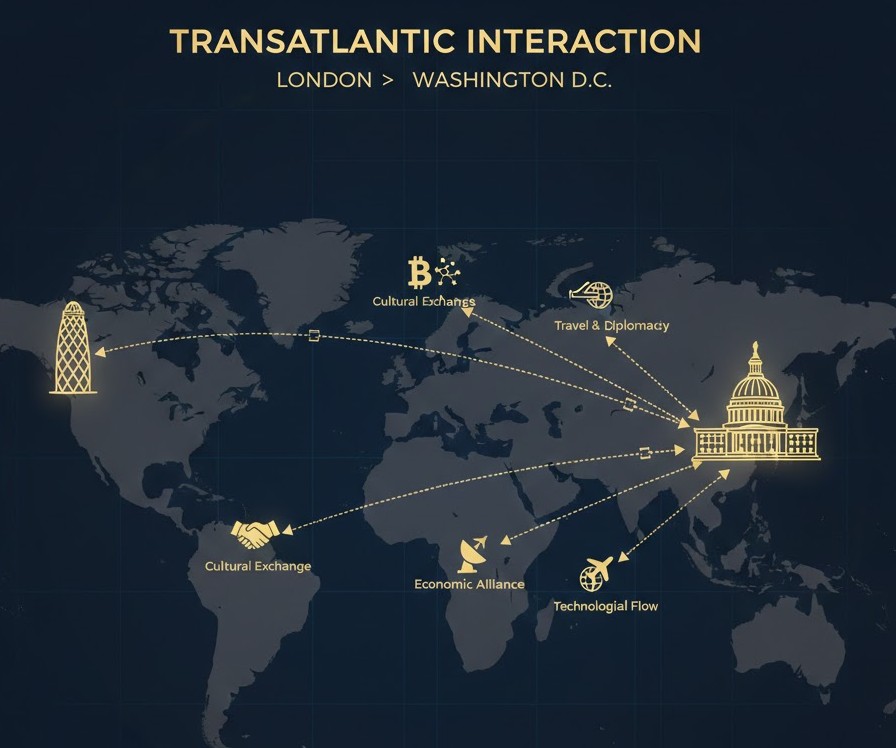
Analyze dual criminality within one week
Many people initially ask what countries have no extradition to UK, but in practice UK courts focus on dual criminality rather than geography. When you’re dealing with a U.S. extradition request, one of the first things you really need to get a handle on is dual criminality. People often underestimate how crucial it is. After you’ve checked whether there are any notices or warrants floating around, you want to figure out whether the thing the U.S. is accusing you of would actually be a crime in the UK — and importantly, UK courts look at the law as it stands in 2026, not what it was years ago when the alleged conduct happened.
And here’s the part most people don’t expect: dual criminality fails more often than you’d think. Judges have thrown out U.S. requests because the behaviour simply wasn’t illegal here. For example, the Americans treat unlicensed crypto activity as a criminal offence under 18 USC 1960, but in the UK, after the FCA’s 2024 guidance, small peer‑to‑peer crypto trades are still fine as long as you stay under £10,000 a month. Same story with supplement marketing — the FTC can turn a dodgy health claim into a wire‑fraud case, while in Britain the ASA just gives you a slap on the wrist and maybe a fine. Two people avoided extradition in 2024 because their “fraudulent” statements were made on a UK‑based website.
Data handling is another one. Several U.S. states criminalised certain data‑collection practices recently. Under UK GDPR, those same practices are lawful as long as you’ve done the usual notice‑and‑consent routine. And then there’s parallel imports: perfectly legal here, potentially “trademark counterfeiting” over there. It’s a mess.
Because of all this, you really don’t want to rely on your own reading of the law. Judges ignore that instantly. What actually helps is a written legal opinion from a UK solicitor confirming that what you did was lawful here. It’s not cheap — usually somewhere between £3,000 and £8,000 — but courts take these opinions seriously. A good one will point to the exact UK statutes, relevant FCA or ASA guidance, case law, and then compare all of that with whatever U.S. statute the Americans are waving around.
Once you’ve sorted out dual criminality, the next big thing you need to think about is what would actually happen to you if you were sent to the U.S. This isn’t about drama or fear‑mongering — it’s about Article 3 of the ECHR, which deals with inhuman or degrading treatment. If you want to make that argument, you need real evidence about the specific place you’d likely end up in, not vague statements about “harsh American prisons.”
And the truth is, the U.S. system is all over the place. Where you land depends on the charges and your criminal‑history score. If the DOJ decides your case touches “national security” — and they use that label very broadly these days — you could be placed in a Communications Management Unit (CMU) or under Special Administrative Measures (SAMs). Those are not pleasant places. CMUs give you one short monitored phone call a week, one non‑contact visit a month, and your mail can take weeks to reach you because it’s read and copied first. SAMs are even harsher: no phone calls except with your lawyer, no contact with other inmates, no media, and people can sit under those restrictions for years before trial.
The statistics aren’t great either. According to the Bureau of Justice Statistics, more than a third of federal pre‑trial detainees spend over 30 days in isolation. In international extradition cases, people wait an average of 18 months before trial. The suicide rate in isolation is more than four times higher than the general population.
And if you’re convicted of something serious, you might end up in ADX Florence — the Supermax. That’s the place with 23‑hour lockdowns in a concrete cell, one hour alone in a cage outside, meals through a slot in the door, and almost no human contact. The European Court of Human Rights has said ADX doesn’t automatically violate Article 3, but if someone has mental‑health issues, it absolutely can.
If you want to make an Article 3 argument, you need specific evidence: reports from groups like Reprieve UK or the ACLU, statements from families of people held in the same facilities, and documentation showing how the place actually operates, not just what the official policy says. This part doesn’t cost much — it just takes time and persistence. But without it, Article 3 arguments almost always fall flat. Framing the issue as what countries don’t extradite to the UK often distracts from the legal analysis that actually persuades judges.
Defense Strategies: How to Defeat a Request in a UK Court
Experienced extradition lawyers UK focus on procedural weaknesses rather than debating the merits of the alleged offence. If you’ve ever watched someone go through an extradition case in Westminster Magistrates’ Court, you know the truth: most defences don’t survive first contact with the judge. There are only a few arguments that consistently work, and they’re not the ones people usually expect. Below is what actually matters — not in theory, but in real cases from the last few years.
Forum bar: the “Where should this even be tried?” argument
Instead of asking what countries don’t have extradition with UK, the forum bar examines where the conduct and its effects primarily occurred. The Forum Bar is the closest thing the UK has to common sense in extradition law. Instead of obsessing over whether a crime happened, the court asks a much more grounded question:
“Is the UK the right place to deal with this?”
And honestly, this is where a lot of U.S. requests start to wobble.
The “Substantial measure” test
Judges have become surprisingly literal about geography. They don’t care where the server was, or whether the victim company has a Delaware address. They look at where you physically were when everything happened.
In several 2024 cybercrime cases, people walked free simply because they never left their UK home office. Even if the alleged target was American, the court said:
“You were here, the conduct happened here, and we have our own laws for this.”
And that’s the key — if the UK could prosecute you under something like the Computer Misuse Act, the Forum Bar suddenly becomes very powerful.
Victim centricity and harm distribution
Another thing judges look at is where the harm actually landed. If most of the losses were in the UK, the court tends to say:
“Well, if anyone should deal with this, it’s us.”
In one 2025 case, the UK losses were more than double the U.S. losses, and that alone tipped the scales. Showing that most victims are UK‑based — even just over 50% — can completely change the outcome.
Evaluating “Deep‑rootedness”
This is where your personal life suddenly becomes legally relevant. The court looks at how anchored you are in the UK:
- Ten years of lawful residence is a strong starting point.
- British kids, a long‑term job, a mortgage — all of that helps.
- But any U.S. citizenship or Green Card history? Judges treat that like a giant “but maybe you do belong there” sticker.
It’s not fair, but it’s how they think.
The role of prosecutorial inaction
Here’s something most people don’t realise:
If the Crown Prosecution Service (CPS) doesn’t want to prosecute you, that’s a huge deal.
A formal CPS “declination” letter is basically the UK saying,
“We don’t think this is worth a trial here.”
And if the “natural forum” doesn’t care, it becomes much harder for the U.S. to argue that they should drag you across the Atlantic.
What you actually need to prove the forum bar
Judges don’t accept vibes. They want paperwork. Lots of it.
- Locus evidence: bank statements, NHS records, HMRC logs — anything proving you were physically in the UK.
- Victim metrics: a breakdown of where the losses occurred.
- Immigration history: SAR results, passport scans, travel records.
- Everyday life evidence: tenancy agreements, employer logs, even supermarket loyalty cards.
Yes, really. In one 2024 case, Tesco Clubcard data proved someone was in Manchester on a day the DOJ insisted he was in Virginia. That was the end of the U.S. argument.
Human rights: articles 3 and 8 ECHR
Human rights arguments still work, but only when they’re extremely specific. Judges no longer accept broad statements like “U.S. prisons are harsh.” They want to know exactly how you would be affected.
Article 3: Medical risk and prison conditions
The only Article 3 arguments that succeed are the ones that show a medical gap — a clear mismatch between what you need and what the U.S. Bureau of Prisons can realistically provide.
For example:
- If you have Type 1 diabetes and rely on continuous glucose monitoring, you need evidence that the BOP doesn’t allow CGM devices.
- If you’ve had past medical crises, you need hospital records proving it.
- If your doctor says U.S. custody would be dangerous, it must be your treating NHS specialist, not a hired expert.
Judges trust long‑term NHS clinicians far more than private experts. At this stage, questions about which countries have no extradition with UK often arise, particularly when detention conditions and medical risk become central to the case.
Article 8: Family life and proportionality
Article 8 is not a magic shield, but it can work in white‑collar cases where the alleged harm is relatively small.
The court looks at:
- minor children
- elderly dependents
- a spouse who cannot relocate
- whether the family would collapse without you
If the alleged offence is something like a small tax issue, the court may decide that destroying a family is simply disproportionate.
Mental and physical health
Under Section 91, the court must stop extradition if it would be “unjust or oppressive” due to health.
The cases that succeed usually involve:
- a documented history of suicide attempts
- long‑term psychiatric treatment
- diagnoses like ASD, treatment‑resistant depression, or complex PTSD
The key is proving not just that you’re unwell, but that the U.S. facility cannot keep you safe. That’s a high bar, but not impossible.
Political motivation
This is the hardest defence of all — judges hate the idea that a treaty partner might be acting in bad faith. But it’s not impossible.
You need to show things like:
- the request came right after you refused to cooperate with U.S. authorities
- political appointees, not career prosecutors, are driving the case
- public statements by U.S. officials show prejudice
It’s rare, but when it works, it works because the defence shows a pattern of pressure, timing, and political heat — not just vague accusations.
Practical advice for 2026: What has changed?
As we move through 2026, the US Department of Justice (DOJ) has shifted its focus from simple data theft to more sophisticated theories of liability involving Artificial Intelligence and algorithmic manipulation. If you are facing extradition from the UK, your strategy must evolve beyond traditional “hacking” defenses.
1. The DOJ’s new playbook: algorithmic manipulation
The landscape of US criminal charges has expanded. We are now seeing “Cyber-Fraud” and “Economic Espionage” charges applied to the following activities:
- Algorithmic Poisoning: Accusations of intentionally corrupting training data to degrade a competitor’s AI performance (often framed as Wire Fraud or Computer Fraud and Abuse Act violations).
- Model Inversion Attacks: The DOJ now treats the unauthorized extraction of proprietary weights or “logic” from a neural network as a high-stakes theft of trade secrets.
- Market Manipulation via Botnets: Beyond standard spoofing, the focus is now on AI-driven high-frequency trading disruptions.
Strategic Defense: You must prove that the conduct was a legitimate “security audit” or “competitive research” rather than criminal intent. In 2026, the distinction between a “security researcher” and a “cyber-criminal” is the primary battleground in Section 81 (Political Motivation) hearings.
2. Parallel defense: The UK-US pincer movement
The most critical mistake defendants make is focusing solely on the Westminster Magistrates’ Court. By the time you lose an extradition hearing in London, it is often too late to influence the outcome in the US.
Why You Need US Counsel Immediately:
- Pre-Indictment Negotiations: In some cases, US attorneys can negotiate a “voluntary surrender” or a plea deal that avoids the extradition process entirely, potentially allowing for “house arrest” in the UK rather than a US jail cell.
- Challenging the “Probable Cause”: While UK courts don’t look deeply at the evidence, a US lawyer can file motions to dismiss the indictment in the US District Court. If the US indictment is quashed, the UK extradition case collapses instantly.
- Bail Package Preparation: If you are extradited, you will face a “rebuttable presumption” of flight risk. Having a US team prepare a robust bail package (property bonds, electronic monitoring) months in advance is the difference between going home on bond or sitting in a US federal facility for years awaiting trial.
Online lists of countries that don’t extradite to UK rarely take into account parallel US proceedings that continue regardless of location.
3. Evidentiary checklist for 2026
To bridge the gap between UK human rights arguments and US criminal defense, you need:
| Document Type | Purpose |
| Expert Technical Audit | To demonstrate that the “manipulation” was a software bug or standard industry practice. |
| Section 91 Medical File | Recent (less than 6 months old) psychiatric reports focusing on “Oppressiveness.” |
| US Bail Feasibility Study | A report from US counsel confirming a viable residence and supervision plan in the States. |
The strategic necessity of parallel US counsel
Many defendants make the fatal mistake of hunkering down in the UK and ignoring the US indictment. In 2026, a “wait and see” approach is a recipe for failure.
Why you need a US team immediately:
- The “Speedy Trial” Clock: Under 18 USC 3161, the US must bring you to trial within a specific timeframe. If you fight extradition in the UK for 18+ months, a skilled US lawyer can often move to have the US charges dismissed entirely based on “Speedy Trial” violations. Even countries with no extradition to UK provide little protection once an active US indictment is already in place.
- Killing the Case at the Source: A US lawyer can file a Motion to Dismiss in a US District Court. If they successfully argue the indictment is legally flawed, the UK extradition request evaporates instantly.
- Negotiating “Voluntary Surrender”: Often, US prosecutors prefer a guaranteed plea (perhaps with no jail time or a transfer to a UK prison) over a three-year extradition battle. You can only negotiate this through US-admitted counsel.
What to look for:
Don’t just hire a “criminal lawyer.” You need a specialist in the District of filing (e.g., SDNY or NDCA) who understands the intersection of international law and the Fourth Amendment (suppression of digital evidence).
Conclusion
The extradition landscape in 2026 has fundamentally shifted from physical acts to algorithmic intent. As the US DOJ continues to expand the reach of the Computer Fraud and Abuse Act (CFAA) to criminalize routine tech activities—such as web scraping, AI training, and automated trading—defendants in the UK find themselves at a critical crossroads.
Success in these cases no longer rests on a single argument. It requires a dual-track strategy:
- The UK Shield: Leveraging the “Dual Criminality” gap and Section 91 medical protections. By demonstrating that the DOJ’s “algorithmic deception” theories do not constitute crimes under the UK’s Computer Misuse Act, you can frame the extradition request as a legal overreach.
- The US Sword: Engaging parallel US counsel is not a luxury—it is a tactical necessity. Only a US-based defense can exploit the Speedy Trial Act, challenge the constitutionality of digital seizures, or negotiate a resolution that bypasses the extradition process entirely.
In 2026, the goal is not just to “win” in London, but to make the US prosecution unsustainable before you ever set foot on a plane. There is no definitive list of the best non extradition countries UK, only jurisdictions whose position may shift depending on timing and political context. Waiting for the UK court’s final ruling before preparing your US defense is a strategic failure that ignores the most powerful tools currently available to international defendants.