




Interpol Yellow Notice
Our legal team provides expert assistance with Interpol Yellow Notices — from locating missing persons and challenging wrongfully issued notices to navigating cross-border family disputes. We protect your rights at every stage of the international legal process.

Interpol Yellow Notices are one of the most distinctive categories within the INTERPOL notice system, issued specifically to help locate missing persons — most commonly minors — and to identify individuals who are unable to identify themselves. Unlike a Red Notice, which focuses on criminal suspects, a Yellow Notice is a humanitarian tool designed to protect vulnerable individuals and assist families in reuniting with missing loved ones. Understanding its purpose, legal framework, and the rights of those named in a notice is essential for both families and legal practitioners navigating international law.
What is an Interpol Yellow Notice?
An Interpol Yellow Notice is an official request circulated among Interpol’s 196 member countries, designed to assist in the location of missing persons — particularly minors — and to help identify individuals who are unable to identify themselves due to incapacity or other circumstances. Yellow Notices do not imply criminality and are fundamentally different from other INTERPOL notices such as Red Notices, which are used to seek the arrest of suspects, or Blue Notices, which are issued to gather information about persons of interest in criminal investigations.
Specialist Legal Support Against Transnational Charges
Our dedicated international human rights lawyers uncover procedural violations and challenge abusive cross-border alerts. We build proactive defense strategies to safe-keep your personal data and protect your global freedom.
The Yellow Notice system exists within a broader framework of INTERPOL’s colored notice system. Each category of notice is designed to serve a specific legal or investigative purpose, and the Yellow Notice is specifically structured to address situations where a person’s safety, wellbeing, or identity is in question. Crucially, being the subject of a Yellow Notice does not mean a person is suspected of any wrongdoing.
When is an Interpol Yellow Notice Issued?
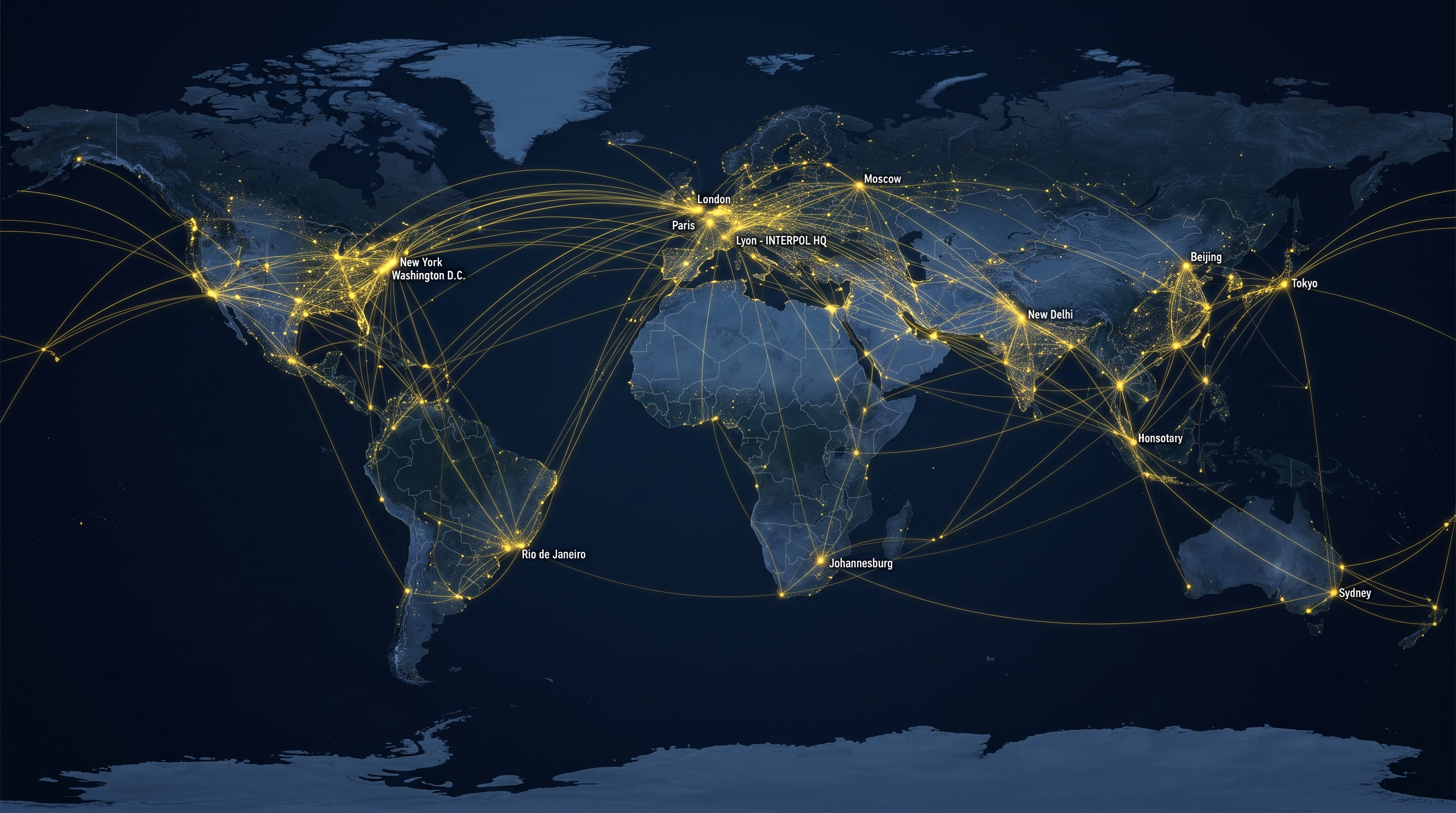
INTERPOL Yellow Notices are issued under several distinct circumstances. The most common scenario involves a missing child — including cases of international parental child abduction — where a parent, guardian, or national authority reports a minor as missing and believes the child may have been taken across international borders. However, the Yellow Notice system is also used in other situations, including:
- Missing adults who have disappeared under suspicious or unexplained circumstances and whose family or representatives have made a formal request through national law enforcement;
- Unidentified individuals who are alive but unable to communicate their identity due to mental incapacity, serious injury, or other medical conditions;
- Unidentified human remains, where authorities are attempting to establish the identity of a deceased person.
In cases of international parental abduction, Yellow Notices have become an important tool alongside the Hague Convention on the Civil Aspects of International Child Abduction, enabling law enforcement agencies worldwide to act rapidly and coordinate searches across borders. When issued in such cases, the notice includes photographs, physical descriptions, and any other identifying information that may assist in locating the individual.
Who Can Request a Yellow Notice?
Only national law enforcement agencies — specifically INTERPOL’s National Central Bureaus (NCBs) — are authorized to submit a request for a Yellow Notice. Private individuals or organizations cannot directly request a notice; they must work through their national police or relevant authority, which evaluates the case and submits the request to INTERPOL through proper legal channels.
The requesting entity must provide comprehensive documentation, including a detailed description of the missing person, photographs where available, last known location and circumstances of disappearance, and a formal legal basis for the request. INTERPOL then reviews the submission to ensure it complies with its regulations and does not involve cases with political, military, or religious dimensions.
This process underscores the importance of engaging experienced legal counsel early. A lawyer with expertise in international law can work alongside national authorities to ensure that the documentation is complete, accurate, and submitted promptly — maximizing the effectiveness of the notice.
Legal Rights and Implications of a Yellow Notice
While Yellow Notices are humanitarian instruments, they can still have significant legal implications, particularly in cases involving custody disputes or international parental abduction. Parents, guardians, or individuals named in a Yellow Notice may face complex cross-border legal proceedings that intersect with family law, immigration law, and international human rights standards.
In cases of parental abduction, both parents may find themselves navigating competing legal systems in different jurisdictions. Courts in some countries may take differing positions on custody arrangements, and the existence of a Yellow Notice can affect immigration status, travel rights, and the legal standing of individuals in the countries where they are located.
Furthermore, Yellow Notices are published among law enforcement agencies in all member states, meaning that the information they contain — including photographs and personal details — is widely disseminated. Individuals who believe that a Yellow Notice has been issued on an incorrect or legally deficient basis have the right to challenge it through INTERPOL’s Commission for the Control of Files (CCF), the body responsible for overseeing the legality and compliance of INTERPOL’s data.

How to Challenge or Remove an Interpol Yellow Notice
Challenging an INTERPOL Yellow Notice is possible through the Commission for the Control of INTERPOL’s Files (CCF). The CCF is an independent supervisory body that reviews requests from individuals who believe that information stored in INTERPOL’s systems violates the organization’s rules. Grounds for challenging a Yellow Notice may include:
- The notice was issued without a valid legal basis or based on inaccurate information;
- The individual named has already been located and the notice is no longer relevant;
- The notice infringes on the individual’s right to privacy or other fundamental human rights;
- In cases of parental abduction, there are competing court orders that support the accused parent’s position.
The process of submitting a request to the CCF is formal and requires thorough documentation. Our legal team assists clients in building a comprehensive case for the removal or correction of a Yellow Notice, ensuring all submissions meet INTERPOL’s procedural requirements.
Beyond the CCF, individuals affected by a Yellow Notice may also seek relief through domestic courts, particularly in cases where a Yellow Notice intersects with custody or family law proceedings. Our lawyers coordinate strategies across multiple jurisdictions to ensure that your rights are protected at every level.
What happens if the person found is an adult
This is where a Yellow Notice differs sharply from other Interpol notices. If the person located is an adult of sound mind, police have no legal basis to detain them against their will. Officers establish identity, check that the person is safe and not under coercion, and confirm whether help is needed. An adult who says they left voluntarily and needs no assistance cannot be held or removed on the strength of a Yellow Notice.
Disclosure of the location is treated separately from confirming that the person is alive. Where telling relatives or the person who started the search would put the person at risk — for example, someone who left an abusive household — the police can report to the initiating country that the person has been found safe without revealing where they are. For minors the position is different: whereabouts are reported to parents or legal guardians, and the next steps are coordinated between the countries involved with the child’s interests in view.
When a Yellow Notice is used in a family dispute
A growing share of Yellow Notices touches international family conflicts, where the line between a lawful relocation with a child and an abduction depends on which country’s court you ask. After a separation one parent may move to their country of origin; from their side this is going home, from the other parent’s side the child has been taken away.
The conflict hardens when courts in two countries have ruled differently — one granting custody and the right to choose the child’s residence, the other treating the departure as unlawful. Both parents can then act lawfully under their own national law and still be in direct conflict. In that situation a request to a National Central Bureau for a Yellow Notice can be formally well founded — the child’s whereabouts are unknown and there are concerns for their safety — while in practice serving as leverage in the dispute. Where a notice is used that way, the answer runs through the Hague Convention machinery and a challenge to the notice itself, not through the search alone.
A Yellow Notice at border control
A Yellow Notice can cause the person to be flagged when they pass a border check in an Interpol member country. A flag is not a ban on entry and not grounds for detention: it signals to the officer that additional checks are required, and what follows depends on national law and on the circumstances of the case.
What changes after a Yellow Notice is deleted
When the Commission for the Control of Interpol’s Files decides to delete a Yellow Notice, the entry is removed from Interpol’s records and member countries are informed that it is no longer valid and that action based on it must stop. The person concerned can ask Interpol for written confirmation of the deletion. That letter is worth having: national databases in individual countries do not always clear at the same time, and a confirmation answers questions at a border or in later proceedings.
How Can Our Lawyers Help You?
Navigating the complexities of an Interpol Yellow Notice requires experienced legal counsel with a deep understanding of international law, INTERPOL’s internal regulations, and cross-border family and criminal proceedings. Our law firm specializes in all categories of INTERPOL notices and provides comprehensive support, including:
- Legal Consultation: We assess your case, explain the implications of a Yellow Notice, and outline the available legal options tailored to your specific situation;
- CCF Petition Preparation: Our lawyers prepare and submit formal requests to the Commission for the Control of INTERPOL’s Files, arguing for the removal or correction of notices that violate applicable rules;
- Cross-Jurisdictional Representation: We coordinate with legal representatives in multiple countries to address the multi-jurisdictional nature of Yellow Notice cases, particularly those involving parental abduction or international family disputes;
- Custody and Family Law Support: In cases where a Yellow Notice is connected to custody proceedings, we collaborate with family law specialists to build a unified legal strategy across jurisdictions;
- Ongoing Case Management: We monitor the status of your case, provide regular updates, and respond swiftly to any new developments in the legal proceedings.
If you or someone you know is affected by an Interpol Yellow Notice, contact our legal team today for a confidential consultation. Our experienced attorneys are committed to protecting your rights and helping you navigate these complex international legal matters with confidence.