



What are human rights and how can you defend them? From UN principles to ECHR practice, we break down the mechanisms of international protection and explain why professional legal help is essential for winning your case in Strasbourg.
European Court of Human Rights News

Published: 05 December 2025 | Updated: 16 December 2025

Last Chance: How Rule 39 of the ECHR Prevents Deportation What Is Rule 39 of the European Court of Human Rights?
Rule 39 of the European Court of Human Rights (ECHR) serves as a critical mechanism for the urgent protection of individuals whose rights are at imminent risk under the European Convention on Human Rights. It enables the temporary suspension of actions — such as deportation or Read more »

Human rights violation claims
Human rights violations are instances where individuals or groups are denied or harmed by their basic constitutional or international human rights. These claims can involve a range of abuses, including physical, sexual, or emotional mistreatment, as well as discrimination based o Read more »

What are the rights of ECHR?
The European Convention on Human Rights (ECHR) stands as a pivotal document in the landscape of international law, championing the cause of human rights since its inception in 1950. Among its various provisions, the concept of ‘absolute rights’ forms the bedrock of the Conven Read more »

How to apply to ECHR?
The European Court of Human Rights (ECHR) plays a crucial role in defending fundamental human rights across Europe. As lawyers, understanding the process of applying to the ECHR and effectively representing clients before this international judicial body is of utmost importance. Read more »

Difference Between the European Court of Justice and the Court of Human Rights
In the realm of international law, there are various courts and tribunals responsible for upholding justice and ensuring the protection of human rights. Two of the most prominent institutions in this regard are the European Court of Justice (ECJ) and the European Court of Human R Read more »
What is European Convention on Human Rights (ECHR)
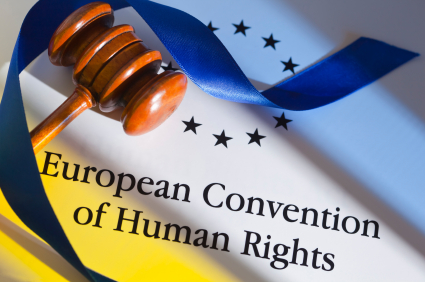
The European Convention on Human Rights (ECHR) is an essential international treaty that safeguards the fundamental rights and freedoms of individuals across Europe. Established in 1950, the ECHR is considered a cornerstone of human rights protection in the region. This article a Read more »

European Court of Human Rights and Children’s Rights in the Modern World
The protection of children’s rights is not only the responsibility of the state and parents but also a fundamental aspect of international law. The European Court of Human Rights (ECHR) plays a significant role in shaping the standards that determine how the interests of childr Read more »
In a constantly changing legal landscape, understanding your fundamental freedoms is not just an advantage—it is a necessity. Many people have heard of “human rights,” but what does that mean in practice, and what steps should you take if they are violated? As a human rights lawyer, I often encounter individuals who are unaware of the mechanisms available for international protection.
In this article, we will break down the basics of international human rights law, the role of the European Court, and how professional human rights law firms can help restore justice.
What Are Human Rights and Why Do They Matter?
To answer the question “what are human rights,” we must look to the fundamental principles laid out in the Universal Declaration of Human Rights (1948). These are inherent rights that every person possesses simply by virtue of being born, regardless of nationality, gender, ethnicity, or religion.
Why are human rights important? Because they limit the power of the state over the individual. They guarantee:
- The right to life and liberty.
- Freedom from torture and slavery.
- Freedom of opinion and expression.
- The right to a fair trial.
These norms are enshrined in specific human rights articles within various international covenants.
International Protection: From the UN to Strasbourg
When national courts are unable or unwilling to protect a citizen, international human rights mechanisms come into play.
The UN Level
At the global level, the UN Human Rights Council plays a key role. It is an inter-governmental body that discusses human rights issues worldwide. While individual complaints to UN committees are possible, for residents of Europe, a regional court is often a more effective mechanism.
The European Level (ECHR)
For citizens of Council of Europe member states, the primary instrument is the European Court of Human Rights. Its work is based on the document known as the European Convention on Human Rights.
What is the European Convention on Human Rights? It is an international treaty that signatory countries are legally bound to uphold. If a state violates the Convention, the victim has the right to file an application in Strasbourg.
Human Rights Violations: Examples from Practice
Unfortunately, human rights violations occur more frequently than one might think. Typical human rights violations examples that human rights lawyers deal with include:
- Inhuman Detention Conditions: Overcrowded prison cells, lack of medical care (Violation of Article 3 of the Convention).
- Unfair Trial: Denial of access to a lawyer, excessive length of proceedings (Violation of Article 6).
- Property Rights Violations: Illegal seizure of land or business by the state (Protocol No. 1).
- Dispersal of Peaceful Protests: Violation of freedom of assembly (Article 11).
Any reputable human rights organization or the advocates for human rights will confirm: timely documentation of the violation is the key to success in court.
The Role of a Human Rights Attorney
Many people ask: why do I need a human rights attorney if I can send a complaint to the ECHR by mail?
The reality is that European Court of Human Rights jurisdiction has strict admissibility criteria. More than 90% of applications are rejected at the filtering stage due to formal errors.
An experienced lawyer helps you to:
- Correctly classify the violation according to human rights law.
- Exhaust all domestic remedies (a mandatory requirement).
- Adhere to strict procedural deadlines (currently 4 months after the final domestic court decision).
- Monitor European Court of Human Rights news to use recent case law precedents in your favor.
Conclusion
Human rights laws are designed for your protection, but they only work when you know how to use them. If you are facing systemic arbitrariness, remember: justice can be found beyond national borders. The European Court for Human Rights remains the last hope for thousands of people every year.
Recommended articles

Passport Issues: When You Need a Lawyer and How They Can Help
Passport issues can have far-reaching consequences that affect a person’s freedom of movement, legal status, and even their ability to maintain a livelihood. While many consider passports to be simple administrative documents, the legal reality is far more complex. When a passp Read more »

Interpol Most Wanted in 2026: Legal Protection, Red Notices, and Extradition Defense
Interpol is a data-driven cooperation platform, not a supranational police authority — yet its data outputs can have real-world consequences in immigration, extradition, and financial compliance. In 2026, the gap between what is publicly visible and what circulates within law-e Read more »

Can You Fly With a Warrant? Airport Risk & Legal Guide 2026
An airport is the most controlled environment on earth. Every passenger is identified, logged, and cross-referenced before they ever reach a gate. If you are traveling with an active warrant — whether a bench warrant, a misdemeanor warrant, or a felony warrant — the question Read more »
FAQs
Who pays the compensation if I win a case at the ECHR?
Compensation (known as "just satisfaction") is paid by the respondent State from its budget. Decisions of the ECHR are binding on the countries that have signed the Convention.
Can I file a complaint to the ECHR against a private company or a neighbor?
No. The ECHR only considers complaints against States (government bodies, police, courts). However, if the State failed to protect you from the illegal actions of private individuals (for example, the police ignored a report of a crime), you can complain about the State's failure to act/protect.
How much does it cost to file a complaint with the European Court?
The procedure for filing a complaint with the ECHR is free of charge—the Court does not charge filing fees. However, you will likely need the services of a lawyer to prepare a high-quality application. At later stages of the process, it is possible to receive Legal Aid from the Court itself if the applicant lacks funds.
Do I need to travel to Strasbourg for the hearing personally?
In 99% of cases—no. The procedure for reviewing complaints at the ECHR is written. The exchange of positions between the applicant and the Government takes place via mail or secure electronic communication systems.
What is "Rule 39" and when does it apply?
This is an emergency measure (interim measure) that the Court applies only in exceptional cases where there is an imminent risk of irreparable harm to the applicant (e.g., to stop extradition to a country where the person faces torture, or to ensure urgent medical assistance).

Christina Abdel Ahad
Senior Associate
Christina Abdel Ahad holds dual Master of Laws degrees in International Business Law (Lebanese American University) and International Human Rights Law (Indiana University). She has experience in international criminal law, including extradition proceedings and human rights protection, and specializes in corporate law, drafting and reviewing legal documents. Christina speaks Arabic, English, and French
Phone:
Email: